Recently I read this interesting article about Mayans and their ancestral relationship with Tamils written by Gene D. Matlock .
Having reached US recently and living very close to lot of Mexicans here, I am fascinated to post this article for everyone.
http://www.viewzone.com/ancientturks.html
Note:
"Whatever things of whatever kind told by whomever it may be ,it is one's wisdom to find the truth" -- Holy Thirukural
Sunday, April 27, 2008


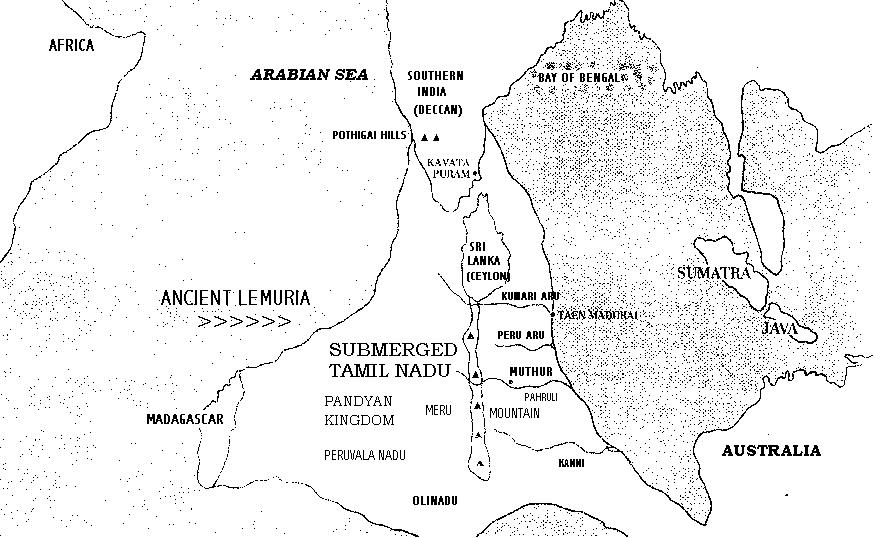
Ancient Tamilnadu Map
 MAP OF INDIA IN 30,000 B.C.
The last surviving LEMURS exist on Madagascar. This is why the ancient land tying India and Australia together, that sank incrementally over time, is referred to as LEMURIA. Myriads of ancient writings from the South Seas, and the ancient Tamil writings on palm tree bark still exist protected underground in the Vatican archives, having been pillaged from various cultures and transported to Rome by order of various popes.
The Tamil bark writings in Southern India tell of the gigantic Southern part of India which used to connect to Australia cataclysmically sinking incrementally over a long period of time. This was ancient Lemuria.
Kumari kandam...One of the subjects of great interest to me is the history of the Origin of Tamils. A quest to know where I came from? 'Who am I?'My search led me to “kumari nadu” or “kumari kandam” (also called Lemuria and Gondwanaland) believed to be the original cradle of the Tamils (or Dravidians in general) by many scholars.. and according to ancient litrature, now lying submerged in the Indian Ocean due to repeated tsunamis (kadalkol)....an artists imagination of the landmass!Some of the inputs about this land from ancient works are fascinating:The kumari nadu mainly consisted of the Pandyan Kingdom. Two wild rivers - "Kumari aaru and Prahuli aaru" flowed through the land. The distance between the two rivers was 700 kavatham (about 1000 miles). And the land was divided into Thengu nadu, Madurai nadu, Munpalai nadu, Pinpalai nadu, Kunra nadu, Kunakkarai nadu, and Kurumparai nadu, and each containing seven smaller Nadus, hence 49 in all.
Ruby was mined from the mountain Mani Malai and gold from Meru malai. The kumari mountain range had forty-eight high peaks.Something even more amazing I read was that the precious stones were mined by Chinese laborers! Iam still searching for more proof of this information.
According to Tamil litrature,the first deluge submerged Ten madurai situated by the kanni river, the seat of the first Tamil sangam and the Pandyan capital was shifted to Kabaadapuram. The Pandyan capital of kabaadapuram finds mention in the Ramayana and Chanakya's Arthasastra.
A second deluge submerged Kabaadapuram , the seat of the second Tamil sangam .Roman writer Pliny, in the second century B.C., refers to the transfer of the capital from Korkai to Madurai. The sea swallowed approximately 1,000 miles of the Pandyan territory known as "Yanainadu".
Despite so much being written about this sunken landmass, it’s a big disappointment that our Indian government has done no full fledged marine scientific research . We still depend on inputs from ancient Tamil, Roman and other scriptures to get an idea about this famed land. The Tsunami of last year is a cruel reminder that should catch the attention of marine archeologists , historians and scholars to our long lost past...I hope someday I will get a better answer to the question i put as the title today....
Tamil Poem in Purananuru, circa 500 B.C
Here is the Translation :
Tamil Poem :
யாதும் ஊரே ; யாவரும் கேளிர் ;தீதும் நன்றும் பிறர்தர வாரா ;நோதலும் தணிதலும் அவற்றோ ரன்ன ;சாதலும் புதுவது அன்றே ; வாழ்தல்இனிதுஎன மகிழ்ந்தன்றும் இலமே; முனிவின்,இன்னா தென்றலும் இலமே; ‘மின்னொடுவானம் தண்துளி தலைஇ, ஆனாதுகல்பொருது இரங்கும் மல்லற் பேர்யாற்றுநீர்வழிப் படூஉம் புணைபோல, ஆருயிர்முறைவழிப் படூஉம்’ என்பது திறவோர்காட்சியின் தெளிந்தனம் ஆகலின், மாட்சியின்பெரியோரை வியத்தலும் இலமே;சிறியோரை இகழ்தல் அதனினும் இலமே.
"To us all towns are one, all men our kin.Life's good comes not from others' gift, nor illMan's pains and pains' relief are from within. Death's no new thing; nor do our bosoms thrillWhen Joyous life seems like a luscious draught. When grieved, we patient suffer; for, we deemThis much - praised life of ours a fragile raft Borne down the waters of some mountain streamThat o'er huge boulders roaring seeks the plain Tho' storms with lightnings' flash from darken'd skiesDescend, the raft goes on as fates ordain. Thus have we seen in visions of the wise ! -We marvel not at greatness of the great;Still less despise we men of low estate."
Tamil Poem :
யாதும் ஊரே ; யாவரும் கேளிர் ;தீதும் நன்றும் பிறர்தர வாரா ;நோதலும் தணிதலும் அவற்றோ ரன்ன ;சாதலும் புதுவது அன்றே ; வாழ்தல்இனிதுஎன மகிழ்ந்தன்றும் இலமே; முனிவின்,இன்னா தென்றலும் இலமே; ‘மின்னொடுவானம் தண்துளி தலைஇ, ஆனாதுகல்பொருது இரங்கும் மல்லற் பேர்யாற்றுநீர்வழிப் படூஉம் புணைபோல, ஆருயிர்முறைவழிப் படூஉம்’ என்பது திறவோர்காட்சியின் தெளிந்தனம் ஆகலின், மாட்சியின்பெரியோரை வியத்தலும் இலமே;சிறியோரை இகழ்தல் அதனினும் இலமே.
Saturday, February 23, 2008
Under Water World
From Graham Hancock's Site :
A physical and intellectual journey, a worldwide exploration diving for the underwater ruins of a lost civilization, this book follows clues in ancient scriptures and mythlogy and in the scientific evidence of the flood that swept the Earth at the end of the last Ice Age. This text explores the question of early humans swept away by the catastrophe.

Who were these populations - pre-civilised hunter-gatherers or more sophisticated peoples altogether? The text is written as a personal adventure involving the reader in the travels, the practicalities and the risks while developing the larger themes along the way, building up to the explosive revelation of a global mystery.
Between 17,000 years ago and 7000 years ago, at the end of the last Ice Age, terrible things happened to the world our ancestors lived in. Great ice caps over northern Europe and north America melted down, huge floods ripped across the earth, sea-level rose by more than 100 metres, and about 25 million square kilometres of formerly habitable lands were swallowed up by the waves.Marine archaeology has been possible as a scholarly discipline for about 50 years - since the introduction of scuba. In that time, according to Nick Flemming, the doyen of British marine archaeology, only 500 submerged sites have been found worldwide containing the remains of any form of man-made structure or of lithic artefacts. Of these sites only 100 - that's 100 in the whole world! - are more than 3000 years old.
This is not because of a shortage of potential sites. It is at least partly because a large share of the limited funds available for marine archaeology goes into the discovery and excavation of shipwrecks. This leaves a shortage of diving archaeologists interested in underwater structures and a shortage of money to pay for the extremely expensive business of searching - possibly fruitlessly - for very ancient, eroded, silt-covered ruins at great depths under water. Moreover, with the recent exception of Bob Ballard's survey of the Black Sea for the National Geographic Society, marine archaeology has simply not concerned itself with the possibility that the post-glacial floods might in any way be connected to the problem of the rise of civilisations. (http://news.nationalgeographic.com/news/2003/01/0110_030113_blacksea.html)
In 1997 a chain of mountains almost 2000 kilometres long and more than 3000 metres high was discovered in the South Pacific. Nobody ever knew the mountains were there before because they are under water - as, in fact, is 70 per cent of the earth's surface. Marine archaeologists -- who are looking for targets much smaller than mountain-ranges under the sea -- can therefore be forgiven for finding just 100 submerged sites more than 3000 years old in the past half century. Even at the crude mapping level, it is one of the absurdities of scientific priorities that we now have a better map of the surface of Venus than we do of the 225 million square kilometres of our own planet's sea-floor.
In December 2000 excavations at Abydos in Upper Egypt by a University of Pennsylvania/University of New York team demonstrated that the intriguing religious practise of boat burial - for example the so-called solar boat of Khufu buried on the south side of the Great Pyramid of Giza - is very likely to have predynastic origins. A fleet of 14 boats found buried at Abydos a decade ago were originally assigned to the mortuary complex of Pharaoh Khasekhemwy of the Second Dynasty (circa 2675 BC). However, after thoroughly examining one of the boats (a sophisticated narrow-prowed "sewn" boat about 23 metres long made of wooden planks lashed together with rope), the excavators now believe that "the ships were buried some centuries before Khasekhemwy's enclosure was built. The fleet may have been intended for use in the afterlife of a much earlier pharaoh, perhaps even Aha [circa 2920 BC], the First Dynasty ruler of Egypt..." (http://www.archaeology.org/online/news/abydos.html) If this is the case, since the boat-burials at Abydos are far from being the work of beginners, then it seems obvious that the practise -- and the entire wonderful religious apparatus that goes with it -- must predate the First Dynasty.
But by how much?
Nobody knows.
Another interesting development also announced in December 2000 was the discovery of a group of very unusual ancient tombs at Elkab in Upper Egypt. The Elkab tombs are thought to date to the Second Dynasty, although the site itself has yielded evidence of continuous occupation from 8000 years ago until about 2000 years ago. The tombs are circular stone structures (with diameters of 18 to 20 metres) which in two cases were carefully arranged around large natural boulders. They have been compared with the Neolithic funeral mounds of Europe and, as the Belgian excavators admit, are of a type "thus far unknown in Egypt". (http://www.usatoday.com/weather/science/archaeology/egyptdawn121200.htm)
So much then for the archaeologists having the whole picture about the evolution and development of any civilisation - even ancient Egypt which has been the subject of more archaeological investigation than any other.
But now let's remember as well that along continental margins and around islands across the world an area bigger than the Unites States of America was inundated at the end of the Ice Age: 3 million square kilometres (an area the size of India) was submerged around Greater Australia alone; another 3 million square kilometres went under around South-East Asia; the Florida, Yucatan and Grand Bahama Banks were fully-exposed off the Gulf of Mexico; huge areas of land were swallowed up in the Mediterranean, the Black Sea, the North Sea and the Atlantic, etc, etc, etc - the list really does goes on and on.
In my view the possibility of a serious "black hole" in scientific knowledge about recent prehistory is plausible, reasonable and worthy of consideration. I therefore propose that the conclusions of modern archaeology regarding the origins and early evolution of human civilisation should be treated as provisional until a comprehensive, global, marine-archaeological survey of continental shelves down to depths of at least 120 metres has been undertaken.
Subscribe to:
Posts (Atom)